Tree removal follows a structured six-stage sequence: on-site assessment, permits and utility checks, equipment setup, controlled cutting, stump handling, and debris cleanup. A standard residential job runs four to eight hours. Larger trees near homes, fences, or power lines often require a full day or specialty equipment like a crane.
Knowing what happens at each stage helps property owners plan ahead, prepare the yard, and avoid surprises when the invoice arrives.
Key Takeaways
- Removals move through six predictable stages from quote to final cleanup
- Job length depends on tree size, surroundings, and equipment access
- Permits may apply for boulevard trees, protected species, or trees over a set diameter
- Stump grinding is usually a separate line item because it requires its own machine
- A reputable company carries general liability and workers’ compensation insurance
- Preparing the work area before crews arrive shortens the job and protects your property
What Tree Removal Actually Involves
Tree removal is the controlled dismantling of a tree, either felled in one piece or sectioned down piece by piece. The right method depends on space, height, lean, defects, and what sits below the canopy.
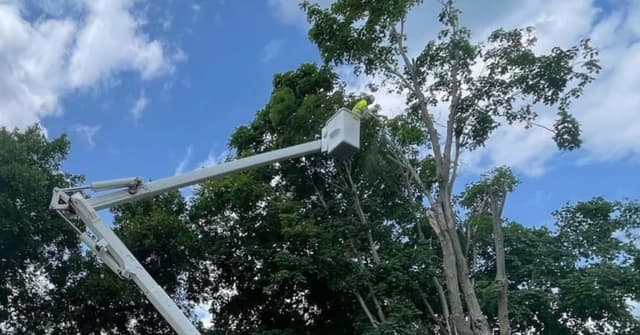
A backyard tree boxed in by sheds, fences, and overhead lines is almost never dropped whole. Climbers or a bucket operator sections the canopy and trunk in pieces using rigging ropes to control each drop. Open-lot trees with clear ground sometimes come down in a single cut at the base. Rigged work takes longer but protects everything underneath.
Stage 1: Inspection and Written Quote
The job starts with an on-site walk-through. A trained arborist evaluates the tree’s condition, lean direction, root health, and access points for trucks and chippers.
What gets assessed:
- Species, height, and trunk diameter
- Internal decay, cracks, or visible dead wood
- Distance to homes, garages, fences, and utility lines
- Whether machines can reach the tree or whether hand work is required
- Slope, turf condition, and any landscaping that needs protection
A solid estimate breaks out removal, stump grinding, debris hauling, and add-ons like crane service. Flat quotes with no breakdown tend to hide charges that show up later.
Stage 2: Permits, Utility Locates, and Scheduling
Some takedowns need permits before work begins. City boulevard trees, heritage trees, and trees on protected lots fall under municipal rules in most Minnesota cities, including St Cloud. Either the homeowner or the company files the paperwork, depending on local policy.
Before grinding any stump or digging, a utility locate request goes through Gopher State One Call. Underground gas, electric, water, and fiber get marked with paint and flags. Calling 811 before excavation is required by law nationwide. Hitting a buried gas line during stump grinding is a serious event, not a small one.
Scheduling depends on weather, crew availability, and equipment booking. Emergency storm work jumps the queue. Routine jobs are typically booked one to three weeks out.
Stage 3: Site Setup and Safety Prep
When the truck arrives, the foreman walks the property and confirms the work plan. Tarps go down to protect the lawn, plywood guards the driveway from heavy machines, and cones or caution tape mark the drop zone.
Typical setup tasks:
- Bucket truck, crane, or climbing gear positioned
- Chipper was placed near the brush pile to shorten the haul distance
- Rigging ropes anchored to upper limbs
- Drop area cleared of vehicles, furniture, and ornamental plants
- Hand signals were confirmed between the climber and the ground team
Setup runs thirty to ninety minutes on most jobs. Skipping it leads to property damage and avoidable accidents.
Stage 4: Cutting the Tree Down
The actual takedown is usually the shortest part of the day for an experienced team. Work starts at the top with small branches, moves down through larger limbs, and finishes with sectioned trunk cuts.
Each piece is either dropped into a clear zone or lowered with rigging ropes for tight quarters. Ground workers chip small material immediately and stack larger logs for later removal or firewood if the homeowner wants them. Once the canopy is gone, the trunk is cut from the top down to a stump roughly four to twelve inches above grade.
Stage 5: Stump Removal or Grinding
The stump comes out separately because it needs a dedicated machine. A stump grinder chews through the wood and surface roots six to twelve inches below grade, leaving a mound of chips and soil that can be raked into the hole or hauled away.
| Stage | Time | Activity |
| Inspection | 20 to 45 min | Assessment and written quote |
| Permits and locates | 2 days to 2 weeks | Paperwork filed, utilities marked |
| Site setup | 30 to 90 min | Equipment positioned, zone secured |
| Cutting | 1 to 4 hours | Tree sectioned or felled whole |
| Stump grinding | 30 to 90 min | Stump ground below grade |
| Cleanup | 30 to 60 min | Debris chipped, logs hauled, site raked |
Full root ball excavation is rare in residential work because it tears up surrounding soil and costs significantly more. Grinding is the standard option unless the homeowner plans to plant a new tree in the exact same spot.
Stage 6: Cleanup and Debris Disposal
The final stage often decides whether a homeowner recommends a company. A thorough wrap-up includes raking sawdust, blowing chips and debris off paths and driveways, and hauling away brush and logs unless the homeowner asked to keep them.
Wood chips from healthy trees make solid mulch for garden beds. Wood from diseased trees, especially emerald ash borer host material, has to be handled under state quarantine rules across much of Minnesota.
What We Commonly See In the Field
Homeowners tend to underestimate two things: how much working room a takedown actually needs, and how much debris a mature tree produces.
A forty-foot maple can fill an entire driveway with brush and yield two pickup loads of logs. Crews move faster and damage less when the area is clear, so relocating patio furniture, vehicles, and grills before arrival pays off more than people expect.
The second pattern is delaying stump grinding to save money. Property owners who push it off discover the stump becomes a trip hazard, sprouts suckers, and attracts carpenter ants within a season. Grinding the same day as removal almost always costs less than scheduling a return trip later.
What Homeowners Can Do Before Crews Arrive
- Pull vehicles out of the driveway and away from the work area
- Unlock side gates if backyard access is needed
- Flag sprinkler heads and low-voltage landscape wiring
- Keep pets and kids indoors throughout the job
- Decide ahead of time whether you want the wood kept for firewood
Frequently Asked Questions
How Long Does a Typical Tree Removal Take?
Most residential tree removals take between four and eight hours to complete. The timeline depends on the tree’s size, condition, location, and access for equipment. Large trees growing close to homes, garages, fences, or power lines often require additional rigging and safety precautions that can extend the project to a full day or longer. Crane-assisted removals may also require extra setup and cleanup time.
Do I Need a Permit to Remove a Tree on My Own Property?
In many cases, homeowners can remove trees on private property without a permit. However, local regulations may apply to protected species, heritage trees, boulevard trees, or properties located within conservation districts. Requirements vary by municipality, so it is always worth checking with the local forestry, planning, or public works department before scheduling removal.
Is Stump Grinding Included With Tree Removal?
Not always. Many tree service companies quote stump grinding as a separate service because it requires specialized equipment and additional labor. Some homeowners choose to leave the stump temporarily, while others prefer complete removal to improve appearance, eliminate tripping hazards, and make future landscaping easier. Always ask for clarification when reviewing an estimate.
Can a Tree Be Removed During Winter?
Yes. Winter is often an excellent time for tree removal because frozen ground helps reduce lawn disturbance and dormant trees are easier to access without dense foliage. In many areas, winter removals can be completed more efficiently, especially when weather conditions remain stable. Emergency removals can also be performed year-round when safety risks exist.
What Happens to the Wood After Tree Removal?
Most tree service companies offer several disposal options. Brush and smaller branches are typically chipped and removed or left on-site as mulch if requested. Larger logs may be hauled away, cut into firewood lengths, or stacked in a designated area. If the tree is diseased or affected by invasive pests, disposal procedures may follow state or local guidelines to prevent further spread.
Will Heavy Equipment Damage My Lawn?
Professional crews take steps to minimize lawn damage by using protective mats, plywood, and strategic equipment placement. Minor surface disturbance may occur, particularly during wet conditions or when working in tight spaces, but experienced operators can significantly reduce the impact. Proper planning before work begins is one of the best ways to protect landscaping and turf.
Do Professional Tree Services Carry Insurance?
Reputable tree service companies carry both general liability insurance and workers’ compensation coverage. These policies help protect homeowners from potential financial responsibility if property damage or worker injuries occur during the project. Before hiring any contractor, request proof of current insurance and verify that coverage is active.
How Much Does Tree Removal Typically Cost?
Tree removal costs vary based on the tree’s height, diameter, condition, location, and overall complexity. Smaller trees may cost only a few hundred dollars, while large trees growing near structures or utility lines can cost several thousand. Obtaining multiple written estimates helps homeowners compare scope, safety procedures, and pricing before making a decision.
What Is the Difference Between an Arborist and a Tree Cutter?
An ISA-certified arborist has specialized training in tree biology, risk assessment, pruning standards, and tree health management. A tree cutter may have practical experience removing trees but may not hold professional certifications. For projects involving hazardous trees, valuable specimens, or removals near structures, working with a certified arborist often provides an added level of expertise.
Can I Remove a Tree Myself to Save Money?
Small saplings and very small trees may be manageable for experienced homeowners, but larger trees present significant risks. Trees that lean toward structures, exceed fifteen feet in height, or grow near utility lines should generally be handled by insured professionals. Chainsaw injuries, falling limbs, and unexpected tree movement are among the most common causes of serious DIY accidents.
Final Thoughts: What Homeowners Should Remember
Tree removal may look chaotic from the curb, but experienced crews follow a carefully planned process designed to keep people, property, and equipment safe. Understanding each stage of the job helps homeowners compare estimates more accurately, prepare their property, and choose a company that takes safety and professionalism seriously.
If you need professional tree removal, stump grinding, or emergency tree services, contact Total Control Tree Service to schedule an on-site assessment and receive a detailed estimate.