
In St Cloud, the best time to prune most trees is late winter, roughly February through early March, while trees are dormant and disease pressure is at its lowest. Cold-climate pruning calls for tighter timing, smaller cuts, and species-specific rules because USDA Zone 4b winters punish poorly placed cuts more than milder regions.
The wrong cut at the wrong time can invite oak wilt, frost cracks, or rot that takes years to surface.
Key Takeaways
- Late dormant season works best for most species in central Minnesota
- Oaks should not be pruned between April and July because of oak wilt risk
- Maples and birch may drip sap when cut in spring, which is harmless
- Never remove more than 25 percent of live canopy in a single year
- The three-cut technique prevents bark tearing on larger limbs
- Storm damage is the only situation that overrides seasonal timing
Why Cold-Climate Pruning Is Different
Trees in Zone 4 face deep freezes, extreme temperature swings, and a short healing window. According to the 2023 USDA Plant Hardiness Zone Map, St Cloud sits in Zone 4b, with average annual minimum temperatures between -25°F and -20°F.
That climate creates three pressures unique to northern regions:
- Short compartmentalization window. Trees seal off wounds during active growth, which is brief this far north.
- Freeze-thaw cycles. Sap freezing and thawing inside fresh cuts can split bark along the wound edge.
- Concentrated disease vectors. Many fungal and insect threats compress their active season into late spring and summer, making timing critical.
When to Prune Cold-Climate Trees
The general rule is to prune during full dormancy, after the worst cold has passed but before buds swell. In St Cloud, that window typically opens in late January and closes around mid-March.
Light shaping, deadwood removal, and small clearance cuts can happen almost any time. Seasonal rules apply mainly to structural cuts, large limb removal, and any work on disease-sensitive species.
Late Winter (February to Mid-March)
Best for nearly all deciduous trees. Cuts are clean, structure is visible without leaves, and wounds begin sealing as soon as spring growth starts.
Spring and Early Summer
Avoid pruning oaks and elms in this window. Beetles that spread oak wilt and Dutch elm disease are active. Light maintenance on other species is acceptable but not ideal.
Mid to Late Summer
Workable for light shaping after the spring growth flush has hardened off. Heavy cuts in this period reduce a tree’s stored energy heading into winter.
Fall
Generally the worst time. Cuts heal slowly, decay fungi release spores, and trees redirect energy from healing to dormancy preparation.
Species-Specific Timing
| Species | Best Window | Avoid | Reason |
| Oak (red, white, bur) | November to March | April to July | Oak wilt spread by sap beetles |
| Maple (sugar, silver, red) | Late winter or mid-summer | Early spring | Heavy sap bleed (harmless but messy) |
| Birch | Mid-summer | Late winter and early spring | Severe sap loss, bronze birch borer activity |
| Elm | November to March | April to October | Dutch elm disease beetle activity |
| Ash | Late winter | Spring during EAB flight | Emerald ash borer movement |
| Apple, crabapple | Late winter | Wet weather any season | Fire blight risk |
| Spruce, pine | Late winter to early spring | Fall | Cold sensitivity at fresh cuts |
| Honeylocust | Late winter | Wet conditions | Canker fungi enter through wounds |
Proper Pruning Cuts
A clean cut heals faster than a torn one. Three rules apply to almost every cut on a cold-climate tree.
Cut just outside the branch collar. The collar is the slightly swollen ring of tissue where a branch joins the trunk. Cutting flush against the trunk removes the healing tissue. Cutting too far out leaves a stub that rots.
Use the three-cut method for limbs over two inches thick. First, an undercut about twelve inches from the trunk. Second, a top cut a few inches past the undercut to drop the limb cleanly. Third, the final cut at the branch collar. This sequence prevents bark from tearing down the trunk as the limb falls.
Match the tool to the limb size. Hand pruners for branches under three-quarters of an inch. Loppers for up to one and a half inches. Pruning saws or chainsaws for anything thicker. Forcing a small tool through a heavy limb crushes bark.
Common Mistakes Around St Cloud
A few patterns show up on residential trees across central Minnesota.
Topping mature trees. Cutting the upper canopy back to stubs is one of the most damaging practices in the field. It triggers weak water sprouts, opens massive wounds, and shortens lifespan. The International Society of Arboriculture has opposed topping for decades.
Lion-tailing. Stripping interior branches off limbs and leaving foliage only at the tips. This makes branches whip in the wind and increases breakage during the spring ice storms common across central Minnesota.
Pruning oaks during high-risk months. Oak wilt has been confirmed in Stearns County and surrounding areas. Any fresh oak wound during sap beetle flight is a potential entry point. The Minnesota DNR recommends pruning oaks only from November through March.
Painting wounds on non-oak species. Old advice was to seal every pruning cut with tar or paint. Current research shows that wound dressings on most trees slow healing and trap moisture. Leave routine cuts open to air-dry naturally. (Oak wounds during high-risk months are a documented exception covered below.)
Removing too much at once. Taking more than a quarter of live foliage in one year stresses the tree and triggers excessive sprouting.
What to Avoid
- Pruning oaks between April and July outside of true emergencies
- Sealing routine cuts on healthy non-oak species
- Topping or heading back mature trees
- Cutting through the branch collar
- Pruning during wet weather, which spreads fungal spores
- Using dull or dirty tools that crush bark
- Removing more than 25 percent of live canopy in one season
When Pruning Becomes Dangerous
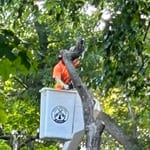
While many light pruning tasks can be handled from the ground, some situations create significant safety risks and are best left to a qualified arborist. Tree work consistently ranks among the more hazardous outdoor maintenance activities because of falling limbs, chainsaw injuries, electrical hazards, and unstable trees.
Avoid pruning yourself when:
- Branches are growing near power lines
- Climbing or working from a ladder is required
- Limbs exceed four inches in diameter
- Storm damage has left hanging or partially broken branches
- The tree shows signs of decay, cavities, cracks, or structural instability
- Specialized equipment such as ropes, rigging, or aerial lifts is needed
In these situations, hiring an ISA-certified arborist is typically the safest option for protecting both people and property.
What We Commonly See In the Field
Homeowners often wait too long between pruning cycles. A young maple that gets light structural pruning every two to three years grows into a sound mature tree. A neglected maple often develops co-dominant stems with included bark, which becomes a major failure point during ice storms.
The other pattern is panic pruning after the first heavy snow. Branches bent under snow load usually spring back once the load melts. Cutting them off the next morning removes healthy wood that would have recovered. Wait until the snow melts before assessing real damage.
Frequently Asked Questions
When is the absolute best month to prune trees in St. Cloud?
February is often one of the best months to prune many tree species in St. Cloud because trees remain dormant, insect activity is low, and spring growth has not yet begun. However, the ideal timing varies by species. Oaks should generally be pruned between November and March to help reduce the risk of oak wilt.
What if a storm breaks an oak branch in June?
If a storm damages an oak during Minnesota’s high-risk oak wilt season, contact a certified arborist as soon as possible. The University of Minnesota Extension and the Minnesota Department of Natural Resources recommend immediately sealing unavoidable oak wounds with water-based paint or shellac to help deter sap beetles that can spread oak wilt.
How much can I safely prune off a young tree?
For healthy young trees, removing no more than 25 percent of the living canopy in a single growing season is generally considered safe. Trees that are stressed, newly planted, or recovering from damage should have no more than 10 to 15 percent removed at one time.
Is fall a good time to prune?
Fall is generally not the preferred season for major pruning. Many fungal pathogens release spores during autumn, and trees are preparing for dormancy rather than actively sealing wounds. Minor corrective pruning may be appropriate, but extensive pruning is usually better delayed until the dormant season.
Can pruning help prevent storm damage?
Yes. Proper pruning removes weak, dead, cracked, or poorly attached branches before they fail during strong winds, heavy snow, or ice storms. Structural pruning on young trees can also improve branch spacing and reduce the likelihood of future storm-related damage.
Should I hire a certified arborist?
Homeowners can often handle minor pruning on small ornamental trees from the ground. For mature trees, structural pruning, storm-damaged limbs, trees near power lines, or any work requiring climbing, an ISA-certified arborist is typically the safest choice to protect both tree health and property.
Long-Term Tree Health Starts with Proper Pruning
Proper pruning is one of the most important investments you can make in the long-term health and safety of your trees. In St. Cloud’s challenging climate, success comes down to making the right cuts at the right time and avoiding practices that create unnecessary stress or invite disease. By following species-specific pruning guidelines, maintaining a regular pruning schedule, and addressing structural issues early, homeowners can help their trees remain healthy, attractive, and resilient for years to come. If you’re unsure about the best approach for your trees, the team at Total Control Tree Service can assess their condition and recommend pruning strategies tailored to Minnesota’s unique growing conditions.